


98 In stock
Couldn't load pickup availability
Discuss Your Project With Our Expert.
Email: procurement@rubberfitfloors.co.uk
Address: 9 Fiveacre Close, Thornton Heath CR7 6AS
Estimated delivery: 3 - 5 Working Days from Order Date.
Free Shipping For Orders Over £100
Rubber Stair Nosing Self Adhesive Vinyl Non-Slip Step Edge Trim Bullnose Strips
Rubber Stair Nosing Self Adhesive Vinyl Non-Slip Step Edge Trim Bullnose Strips
Text block
98 In stock
Discuss Your Project With Our Expert.
Email: procurement@rubberfitfloors.co.uk
Address: 9 Fiveacre Close, Thornton Heath CR7 6AS
Estimated delivery: 3 - 5 Working Days from Order Date.
Free Shipping For Orders Over £100


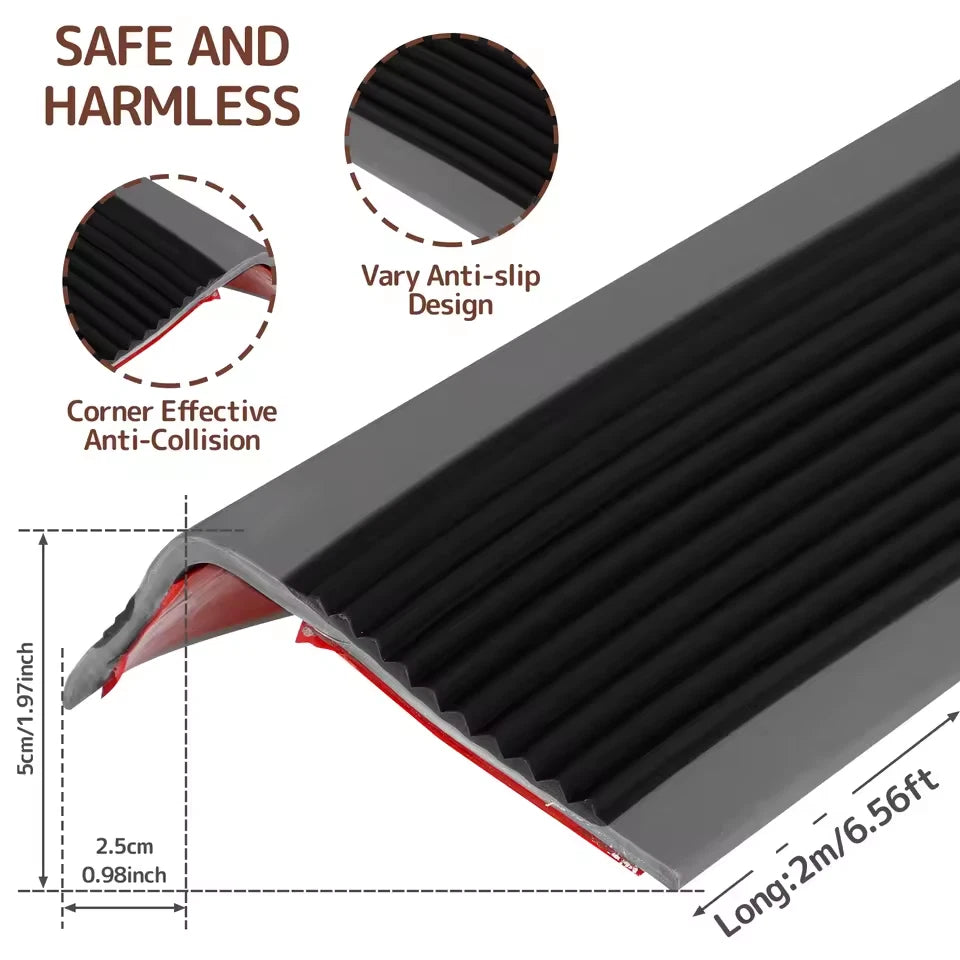
Flexible Stair-Edge Protection Without Drilling
This self-adhesive stair nosing strip provides a practical way to cover and define exposed step edges without installing screws or drilling through the staircase. Its flexible bullnose profile is designed to follow the front edge of a stair tread, creating a cleaner transition between the horizontal surface and the face of the step.
The rubber and vinyl construction gives the strip enough flexibility to wrap around a compatible stair edge while providing a more resilient contact surface than a decorative trim alone. It can be considered for homes, offices and commercial spaces where stair edges require additional protection and a more finished appearance.
A textured upper surface is intended to improve contact underfoot. However, no independently tested slip-resistance classification is included in the supplied information, so the product should not be treated as a guarantee against slipping in wet, contaminated or poorly maintained conditions.
How the Bullnose Profile Covers the Step Edge
The bullnose design extends across the top of the tread and bends around the front edge. This allows one flexible strip to cover the area that receives regular contact from footwear and is often the first part of a step to show wear.
Compared with a flat anti-slip strip placed only on the horizontal surface, a bullnose profile also protects the exposed front of the step. This can help conceal minor cosmetic marks while producing a more complete finish around the edge.
The existing stair shape should be checked before installation. Rounded, square and irregular edges may require different preparation, and the strip must be flexible enough to sit evenly without lifting, stretching excessively or creating raised sections.
Textured Surface for More Defined Foot Placement
The surface texture provides a more noticeable contact area at the front of the tread. This can support more confident foot placement, particularly where a smooth stair surface offers limited texture of its own.
The product is described as non-slip, but practical performance will still depend on the condition of the stairs, the cleanliness of the strip, footwear and exposure to moisture. Dust, oil, water or loose debris can reduce traction on almost any stair surface.
Regular cleaning is therefore important. The nosing should also be inspected periodically to confirm that the surface remains undamaged and that the adhesive has not allowed any part of the strip to lift.
Preparing the Stair Surface for Self-Adhesive Fitting
Self-adhesive backing removes the need for mechanical fixings, but the final bond depends heavily on surface preparation. The stair edge should be firm, clean, dry and free from dust, grease, polish, loose paint or crumbling material.
The strip should be positioned and measured before the protective backing is removed. Once the adhesive touches the stair, repeated repositioning may weaken the bond or create an uneven installation.
Pressure should be applied consistently across the top and around the bullnose section so that the adhesive makes proper contact with the supporting surface. Corners and curved areas require particular attention because these sections are more likely to lift when the strip is not fitted evenly.
The supplier information does not specify the curing time or installation temperature. The adhesive should therefore be allowed to settle according to any instructions supplied with the product before the staircase receives regular foot traffic.
Choosing a Suitable Stair Surface
This stair nosing may be suitable for indoor and outdoor steps, but self-adhesive products do not perform identically on every substrate. Smooth, stable and properly prepared surfaces generally provide a more consistent base than rough, dusty, porous or damaged materials.
Before fitting the complete staircase, a small test section should be used where possible. This helps confirm whether the adhesive bonds correctly without damaging the underlying finish.
Painted wood, sealed concrete, tiles, vinyl and laminate can all have different surface treatments. Compatibility should therefore be confirmed rather than assumed, especially where the floor manufacturer restricts the use of adhesives or where the existing finish is loose.
Protecting Stair Edges from Everyday Wear
The front of a stair tread receives repeated pressure and impact during normal use. Over time, this can contribute to worn coverings, chipped edges and visible marks around the most exposed part of the step.
The flexible nosing creates a protective layer over this area. It can help reduce direct contact with the original edge while giving the staircase a more consistent finished profile.
This product is intended for surface protection and finishing. It should not be used to conceal structural cracks, loose coverings, broken steps or unstable edges. Any underlying defect that affects the safety or strength of the staircase should be repaired before the strip is applied.
Indoor and Outdoor Maintenance Considerations
For indoor use, routine vacuuming or wiping can help prevent grit from collecting on the textured surface. A mild cleaning solution may be used where suitable for rubber and vinyl, but strong solvents and abrasive tools should be avoided.
Outdoor installations may face additional exposure to rain, temperature changes and dirt. Although the product is described as suitable for outdoor use, the durability of the adhesive may depend on weather conditions, surface preparation and whether water can collect beneath the strip.
The edges should be checked regularly for lifting, particularly after heavy rain or temperature changes. A raised section should be addressed promptly because it may create an uneven contact point on the staircase.
Frequently Asked Questions
Does this stair nosing require screws or drilling?
No mechanical fixings are described for this product. It uses a self-adhesive backing intended to attach directly to a prepared stair surface. The step must be clean, dry, stable and free from grease or loose material before installation. Self-adhesive fitting is convenient, but unsuitable preparation can cause the edges or curved bullnose section to lift.
Can this strip be used on outdoor steps?
The supplied description states that it is suitable for indoor and outdoor use. Outdoor performance will still depend on the surface, weather exposure and quality of installation. Steps exposed to standing water, heavy rainfall or significant temperature changes should be inspected regularly because these conditions may affect the adhesive bond over time.
Is the product completely slip-proof?
The textured surface is intended to improve contact and reduce the likelihood of slipping, but no stair covering can guarantee complete protection in every situation. Water, oil, dust, loose debris and unsuitable footwear may affect traction. The product should be fitted correctly, kept clean and used alongside normal staircase maintenance and safety precautions.
Which stair materials can it be applied to?
The listing does not provide a confirmed compatibility list for individual surfaces. The adhesive may bond differently to wood, laminate, vinyl, tile, metal, concrete or painted steps. The surface should be smooth, stable and clean, and a small compatibility test is advisable before fitting the strip across the complete staircase.
Can it cover a damaged stair edge?
The flexible bullnose profile may cover light cosmetic wear, small marks or minor surface imperfections. It should not be used to hide loose flooring, cracked steps, crumbling concrete or structural damage. The underlying stair must be repaired and made stable before the adhesive strip is installed.
Can the stair nosing be cut to fit?
Flexible rubber and vinyl strips can generally be trimmed using a suitable sharp cutting tool, although the supplied information does not specify a recommended cutting method. The required length should be measured and marked carefully before cutting. A straight, clean edge is important so that adjoining sections do not leave visible gaps or raised corners.
How should the self-adhesive backing be installed?
Measure and test-position the strip before removing the protective backing. Clean and dry the stair thoroughly, then apply the strip gradually while pressing across the top and around the bullnose edge. Avoid stretching the material during installation. The supplier does not state a curing period, so any instructions supplied with the product should be followed before regular use.
How should the stair nosing be cleaned?
Loose dirt can be removed with a soft brush, cloth or suitable vacuum attachment. For deeper cleaning, use a mild solution that is compatible with rubber and vinyl. Strong solvents, harsh chemicals and abrasive tools should be avoided because they may damage the textured surface, affect the material or weaken the adhesive around the edges.
At Rubber Fit Floors, we are committed to delivering your orders efficiently and securely to your doorstep. Here’s everything you need to know about our shipping process:
1. Shipping Destinations
We currently ship to the United Kingdom, covering all regions including mainland UK, Northern Ireland, and the Scottish Highlands. If you’re located outside the UK, please get in touch with us to discuss custom shipping options.
2. Processing Time
An order confirmation email does not constitute acceptance of your order. Acceptance occurs only when the order has been dispatched. All orders are processed within 1–2 business days.
Orders placed on weekends or holidays will be processed on the next working day.
3. Delivery Time
Standard Delivery: 3–5 business days.
Express Delivery: 1–2 business days (available at an additional charge).
Delivery times are estimates only and not guaranteed. We are not liable for delays caused by couriers or external factors.
4. Shipping Charges
Standard Delivery: £7.99 (Free for orders over £100).
Express Delivery: £24.95.
For bulky or custom orders, shipping charges will be calculated based on the weight and dimensions of your package.
5. Tracking Your Order
Once your order is dispatched, you will receive an email with a tracking link to monitor your shipment. If you do not receive this information, please contact our support team.
6. Damaged or Lost Shipments
If your order arrives damaged or is delayed beyond the expected delivery time, kindly reach out to us immediately. We will assist you with replacements, refunds, or further inquiries.
7. Contact Us
For any shipping-related questions, feel free to contact our customer support:
📧 Email: procurement@rubberfitfloors.co.uk
📞 Phone: 07404270642
Address: 9 Fiveacre Close, Thornton Heath, CR7 6AS