


99 In stock
Couldn't load pickup availability
Discuss Your Project With Our Expert.
Email: procurement@rubberfitfloors.co.uk
Address: 9 Fiveacre Close, Thornton Heath CR7 6AS
Estimated delivery: 3 - 5 Working Days from Order Date.
Free Shipping For Orders Over £100
Black GRP Stair Nosings Heavy-Duty Anti-Slip Safety Tread Step Edge Protection
Black GRP Stair Nosings Heavy-Duty Anti-Slip Safety Tread Step Edge Protection
Text block
99 In stock
Discuss Your Project With Our Expert.
Email: procurement@rubberfitfloors.co.uk
Address: 9 Fiveacre Close, Thornton Heath CR7 6AS
Estimated delivery: 3 - 5 Working Days from Order Date.
Free Shipping For Orders Over £100


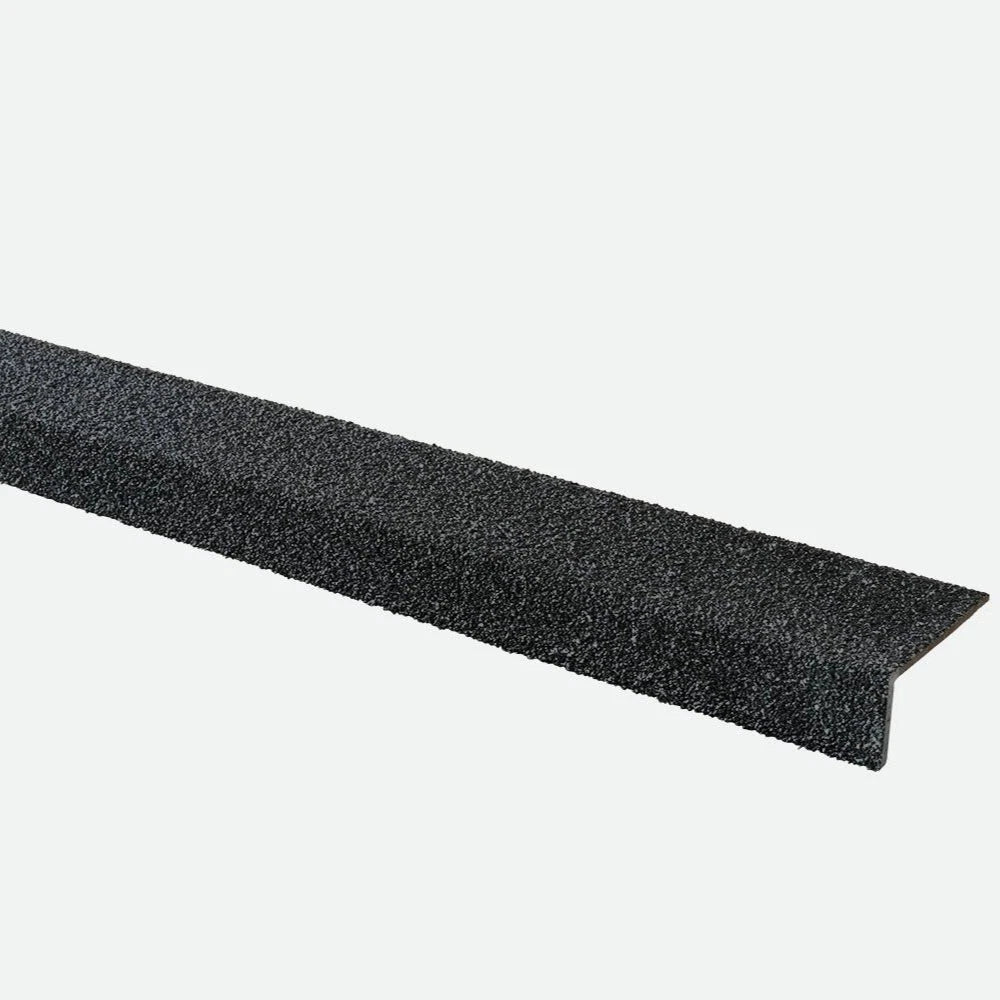
Enhanced Traction for Stair Edges
The leading edge of a stair receives repeated contact throughout the day, particularly in commercial buildings, workplaces and other busy environments. Footwear approaches the step edge from different angles, while dust, general wear and changing surface conditions can affect how much grip is available underfoot. A dedicated stair nosing creates a more defined edge with an additional textured surface where it is needed most.
These black GRP stair nosings combine a rigid glass reinforced plastic profile with an anti-slip tread designed for practical stair protection. The textured surface provides a more secure-feeling contact area for footwear, while the contrasting black finish can make the front edge of each step easier to distinguish from the surrounding stair surface.
This makes the nosing suitable for projects where stair safety, edge protection and long-term everyday use all need to be considered together.
GRP Construction for Demanding Stairways
GRP, or glass reinforced plastic, is a composite material valued for its rigidity and durability. In stair nosings, it provides a solid profile capable of maintaining its form while being exposed to repeated pedestrian traffic.
Unlike a purely decorative trim, a GRP stair nosing has a functional role at the most exposed part of the step. The front edge can receive concentrated impacts from footwear and equipment, particularly on stairs used throughout the working day. Adding a dedicated profile helps protect this area while providing a purpose-built anti-slip surface.
The heavy-duty construction makes these nosings appropriate for environments where stairways need a robust edge treatment rather than a lightweight finishing strip. They can be considered for commercial properties, workplaces, public-access areas and other regularly used stairways.
A Practical Choice for High-Traffic Steps
Busy stairways place different demands on a surface compared with stairs used occasionally in a domestic setting. Frequent pedestrian movement can gradually wear exposed edges, while dirt and everyday debris may accumulate on the tread. For this reason, choosing a stair nosing should involve more than appearance alone.
These GRP nosings are designed around the practical requirements of regularly used steps. The anti-slip tread provides a dedicated textured zone across the stair edge, while the rigid profile helps reinforce the exposed front section of the step.
They are suitable for situations where maintaining a clearly identifiable step edge is important. The black finish also provides a straightforward visual contrast that can help distinguish the nosing from lighter-coloured stair treads and surrounding surfaces.
Step Edge Protection and Visual Definition
The front edge of a stair is particularly vulnerable because it is the point where the horizontal tread meets the vertical riser. Without additional protection, this area can experience repeated contact from footwear and general use.
A stair nosing covers this exposed section and creates a defined transition between the tread and riser. This can help give the stairway a more finished appearance while providing additional material around the edge that receives regular contact.
The black colour has a practical visual function as well as providing a simple finish. Where the surrounding stair material is a different shade, the contrast can make the leading edge easier to identify. This can be particularly relevant in busy buildings where users need to distinguish individual steps clearly.
Suitable Environments and Everyday Applications
The combination of GRP construction, anti-slip tread and heavy-duty positioning makes these nosings suitable for a range of regularly used stairways. They can be considered for offices, commercial premises, industrial workplaces, communal buildings and other locations where stair edges are exposed to frequent pedestrian movement.
They may also be useful when an existing stairway requires additional edge protection without replacing the complete tread. The appropriate application will depend on the stair construction, surface condition and installation requirements.
For any installation, the condition of the underlying step should be assessed first. A stair nosing is intended to work as part of a properly prepared stair surface, so loose, damaged or unsuitable substrates should be addressed before fitting.
Installation and Surface Preparation
A reliable installation starts with accurate measurement and careful preparation. The stair edge should be clean, dry and free from dust, grease, loose particles or other contamination that could interfere with fixing.
The nosing should be positioned consistently along the leading edge of the step. Before permanent fixing, it is sensible to check the alignment across the full width of the stair and confirm that the profile sits correctly against the tread and riser.
The fixing method should be selected according to the stair material and the conditions in which the nosing will be used. On high-traffic stairways, secure attachment is particularly important because repeated footfall can place considerable demands on the profile and its fixings.
Frequently Asked Questions
What are black GRP stair nosings used for?
Black GRP stair nosings are designed to provide additional protection and traction at the leading edge of stair steps. They are particularly useful where stairs experience frequent pedestrian traffic and the exposed front edge needs a more robust treatment.
What does GRP mean in stair nosings?
GRP stands for glass reinforced plastic. It is a composite material reinforced with glass fibres to provide a rigid and durable construction. For stair nosings, this makes it suitable for applications where the edge profile needs to withstand regular everyday use.
Are these GRP stair nosings suitable for high-traffic areas?
They are designed for heavy-duty stair applications and can be considered for areas with regular pedestrian movement. Commercial premises, workplaces and other frequently used stairways can benefit from a robust edge profile with an anti-slip tread.
What is the purpose of the anti-slip tread?
The anti-slip tread creates a textured contact surface across the stair edge. Its purpose is to provide additional traction for footwear compared with a smooth edge, particularly where regular foot placement occurs close to the front of the step.
Can these nosings protect the front edge of a stair?
Yes. A stair nosing sits over the exposed leading section of the step and provides additional material at this vulnerable point. This can help reduce direct wear to the original stair edge from repeated everyday contact.
Does the black colour provide visual contrast?
A black nosing can create a noticeable distinction between the stair edge and a lighter-coloured tread or surrounding surface. Clear edge definition can be useful on busy stairways where individual steps need to remain visually identifiable.
Where can heavy-duty GRP stair nosings be installed?
They can be considered for commercial buildings, offices, workplaces, industrial environments, communal areas and other locations with regularly used stairways. The suitability of the product should always be assessed against the stair substrate and installation conditions.
Can these be fitted over existing stairs?
A stair nosing can potentially be fitted to an existing stair where the substrate is sound and suitable for the chosen fixing method. The surface should be checked for damage, loose material, grease and other issues before installation.
What should be done before installing the stair nosing?
The step should be thoroughly prepared so the fixing system can achieve a secure attachment. Remove dust, dirt, grease and loose material, then check the stair edge for damage or irregularities. Accurate measurement and alignment should also be completed before permanent fixing.
Why is secure fixing important on high-traffic stairs?
Stair nosings are exposed to repeated footfall, so movement or lifting can compromise both appearance and safety. A properly selected and securely installed fixing method helps keep the profile firmly positioned and reduces the risk of creating an uneven or raised edge.
At Rubber Fit Floors, we are committed to delivering your orders efficiently and securely to your doorstep. Here’s everything you need to know about our shipping process:
1. Shipping Destinations
We currently ship to the United Kingdom, covering all regions including mainland UK, Northern Ireland, and the Scottish Highlands. If you’re located outside the UK, please get in touch with us to discuss custom shipping options.
2. Processing Time
An order confirmation email does not constitute acceptance of your order. Acceptance occurs only when the order has been dispatched. All orders are processed within 1–2 business days.
Orders placed on weekends or holidays will be processed on the next working day.
3. Delivery Time
Standard Delivery: 3–5 business days.
Express Delivery: 1–2 business days (available at an additional charge).
Delivery times are estimates only and not guaranteed. We are not liable for delays caused by couriers or external factors.
4. Shipping Charges
Standard Delivery: £7.99 (Free for orders over £100).
Express Delivery: £24.95.
For bulky or custom orders, shipping charges will be calculated based on the weight and dimensions of your package.
5. Tracking Your Order
Once your order is dispatched, you will receive an email with a tracking link to monitor your shipment. If you do not receive this information, please contact our support team.
6. Damaged or Lost Shipments
If your order arrives damaged or is delayed beyond the expected delivery time, kindly reach out to us immediately. We will assist you with replacements, refunds, or further inquiries.
7. Contact Us
For any shipping-related questions, feel free to contact our customer support:
📧 Email: procurement@rubberfitfloors.co.uk
📞 Phone: 07404270642
Address: 9 Fiveacre Close, Thornton Heath, CR7 6AS