


99 In stock
Couldn't load pickup availability
Discuss Your Project With Our Expert.
Email: procurement@rubberfitfloors.co.uk
Address: 9 Fiveacre Close, Thornton Heath CR7 6AS
Estimated delivery: 3 - 5 Working Days from Order Date.
Free Shipping For Orders Over £100
Stair Nosing L-Shape Silver Aluminium 90cm x3.5cm Anti-Slip Insert 5pc for Steps
Stair Nosing L-Shape Silver Aluminium 90cm x3.5cm Anti-Slip Insert 5pc for Steps
Text block
99 In stock
Discuss Your Project With Our Expert.
Email: procurement@rubberfitfloors.co.uk
Address: 9 Fiveacre Close, Thornton Heath CR7 6AS
Estimated delivery: 3 - 5 Working Days from Order Date.
Free Shipping For Orders Over £100


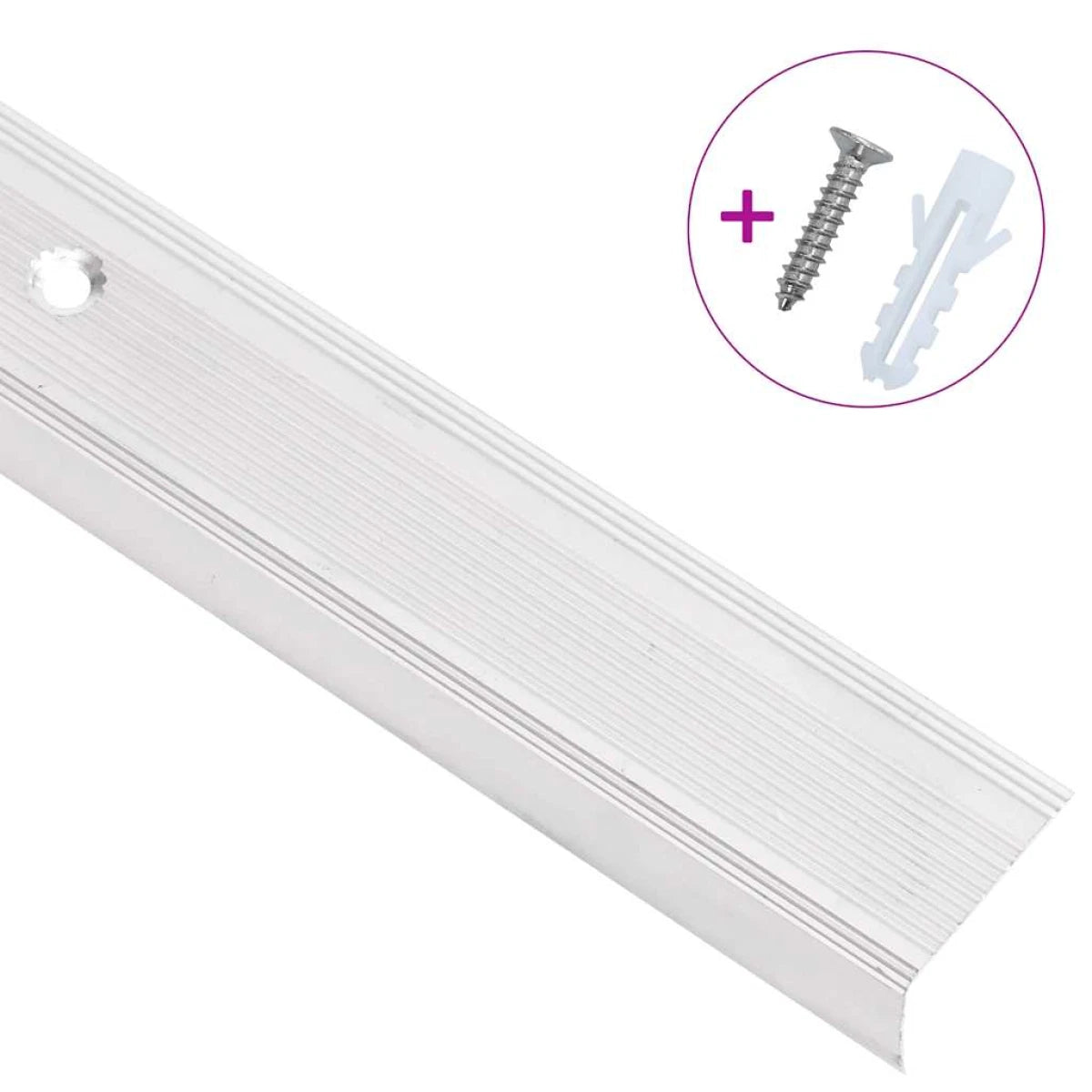
Protect Exposed Step Edges with a Neat Aluminum Finish
The front edge of a stair receives concentrated pressure every time someone steps up or down. Over time, this repeated contact can wear flooring, damage exposed corners and leave the staircase looking unfinished. This silver aluminium stair nosing provides a practical protective profile for covering the leading edge of indoor steps while creating a cleaner and more defined appearance.
Each piece has an L-shaped profile that extends across the tread edge and down the front of the step. This shape helps cover the area most vulnerable to everyday impact and foot traffic. The silver finish offers a neutral, modern appearance that works with a range of staircase materials and interior styles.
Supplied as a set of five, the profiles provide a convenient option for smaller staircases, landings, split-level areas or renovation projects where only selected steps require protection.
Why an L-Shaped Profile Works Well on Stair Edges
An L-shaped stair nosing protects two connected surfaces rather than covering only the top of the tread. The horizontal section sits over the leading area of the step, while the vertical section covers part of the riser-facing edge. This creates a more complete finish around the corner and helps shield the underlying flooring from repeated contact.
The profile is particularly useful where flooring materials end at an exposed step edge. Laminate, wood, vinyl and other finishes can become chipped, lifted or worn when their edges are left unprotected. Installing a correctly sized stair trim helps secure and visually define this vulnerable area.
The listed 3.5 cm profile dimension provides noticeable coverage without creating an excessively bulky appearance. Correct measurement remains important because the nosing should sit evenly across the step and must not interfere with natural foot placement.
Aluminium Construction for Everyday Stair Use
Aluminium combines useful strength with a relatively lightweight structure, making it well suited to interior finishing profiles. It does not add unnecessary bulk to the staircase, yet it provides a firm barrier between everyday foot traffic and the exposed edge beneath it.
The silver surface gives the stair nosing a clean architectural appearance. It can complement grey flooring, light wood, laminate, tiles and modern neutral interiors. Because the finish is visually understated, it can protect the steps without becoming the dominant feature of the staircase.
This type of profile is suitable for domestic and light commercial areas where steps experience regular pedestrian use. Actual performance will depend on the underlying stair material, installation method, fixing quality and level of traffic.
Anti-Slip Inserts Where Foot Placement Matters Most
The leading edge of a step is one of the most important contact points on a staircase. The integrated anti-slip insert adds a textured area near this edge, helping footwear gain better contact than it would on a completely smooth aluminium surface.
This feature can be useful on frequently used indoor staircases, particularly where smooth flooring may provide limited traction. It should be viewed as an additional grip feature rather than a guarantee against slips. Stair safety also depends on adequate lighting, secure installation, clean surfaces and steps that are kept free from moisture or loose debris.
The insert should be checked during routine cleaning. Dirt or residue can reduce the effectiveness of textured surfaces, while a damaged or loose insert should be addressed before the staircase continues to receive regular use.
Planning the Fit Across Five Steps
Before installation, measure the usable width of every step rather than assuming all treads are identical. Older staircases and site-built steps can vary slightly from one level to another. Each profile should be checked against its intended step and trimmed only with equipment suitable for cutting aluminium.
The supplied information does not confirm whether these profiles are adhesive-backed, pre-drilled or intended for a separate mechanical fixing system. The correct installation method should therefore be confirmed from the product packaging before fitting. Fixings must be compatible with both the aluminium profile and the underlying surface.
The step edge should be structurally sound, level and free from dust, grease, loose flooring or damaged material. Stair nosing should not be used to conceal an unstable edge that requires repair. A secure, flush fit is important because raised sections or loose ends can create additional trip points.
Cleaning and Maintaining the Silver Surface
Routine cleaning helps preserve both the appearance of the aluminium and the grip provided by the insert. Loose dust can normally be removed with a soft brush or vacuum, followed by wiping with a lightly dampened cloth and a mild cleaning solution suitable for the materials.
Avoid harsh abrasive pads that may scratch the silver surface. Strong chemical cleaners should also be avoided unless their suitability for aluminium and the insert material has been confirmed. Excess water should not be allowed to collect around the profile or beneath its edges.
The nosing should be inspected periodically for movement, lifting, damaged ends or loosened fixings. Addressing small installation issues promptly can help prevent further movement and protect the staircase underneath.
Frequently Asked Questions
What does the five-piece pack include?
The pack contains five separate silver aluminium stair-nosing profiles, with each piece intended to cover one step when the staircase width and listed profile length are compatible. Fixings, adhesives and additional accessories are not confirmed in the supplied information, so the packaging should be checked before installation begins.
How does the anti-slip insert improve the stair nosing?
The insert creates a textured contact area near the front of the tread, where footwear commonly meets the step. This can provide better surface contact than plain, polished aluminium. It does not make the staircase completely slip-proof, and the steps must still be installed securely, cleaned regularly and kept free from moisture and loose debris.
Can this aluminium stair nosing be cut to fit narrower steps?
Aluminium profiles can generally be shortened using appropriate metal-cutting equipment, but the cut must be straight, smooth and free from sharp burrs. Measure every step individually before cutting, protect the visible finish during the work and ensure the shortened profile can still be fixed securely across its full installed length.
Which staircase materials can this profile be installed on?
An L-shaped aluminium profile may be suitable for steps finished with wood, laminate, vinyl, tile or other solid surfaces, provided the dimensions and fixing method are appropriate. Compatibility cannot be determined from appearance alone, so the substrate, flooring thickness and required adhesive or mechanical fixing should be assessed before fitting.
Is this stair nosing suitable for outdoor steps?
The supplied details do not specifically confirm outdoor suitability. Although aluminium itself can perform in varied environments, the insert, finish and fixing system may respond differently to rain, temperature changes and prolonged moisture. It is safer to treat this as an indoor stair profile unless outdoor use is expressly confirmed on the packaging.
Does the stair nosing cover both the tread and riser edge?
Yes. The L-shaped design is intended to wrap around the leading corner of the step. One section covers part of the horizontal tread surface, while the other extends over the front-facing edge. The exact amount of coverage depends on the profile dimensions, so the step should be measured carefully before ordering or installation.
Will the silver finish match every type of flooring?
The neutral silver appearance coordinates well with many contemporary floors, including grey, black, light wood and neutral-toned finishes. However, colour perception can vary with lighting and surrounding materials. Reviewing the profile beside the existing flooring is the most reliable way to judge whether the finish suits the staircase.
At Rubber Fit Floors, we are committed to delivering your orders efficiently and securely to your doorstep. Here’s everything you need to know about our shipping process:
1. Shipping Destinations
We currently ship to the United Kingdom, covering all regions including mainland UK, Northern Ireland, and the Scottish Highlands. If you’re located outside the UK, please get in touch with us to discuss custom shipping options.
2. Processing Time
An order confirmation email does not constitute acceptance of your order. Acceptance occurs only when the order has been dispatched. All orders are processed within 1–2 business days.
Orders placed on weekends or holidays will be processed on the next working day.
3. Delivery Time
Standard Delivery: 3–5 business days.
Express Delivery: 1–2 business days (available at an additional charge).
Delivery times are estimates only and not guaranteed. We are not liable for delays caused by couriers or external factors.
4. Shipping Charges
Standard Delivery: £7.99 (Free for orders over £100).
Express Delivery: £24.95.
For bulky or custom orders, shipping charges will be calculated based on the weight and dimensions of your package.
5. Tracking Your Order
Once your order is dispatched, you will receive an email with a tracking link to monitor your shipment. If you do not receive this information, please contact our support team.
6. Damaged or Lost Shipments
If your order arrives damaged or is delayed beyond the expected delivery time, kindly reach out to us immediately. We will assist you with replacements, refunds, or further inquiries.
7. Contact Us
For any shipping-related questions, feel free to contact our customer support:
📧 Email: procurement@rubberfitfloors.co.uk
📞 Phone: 07404270642
Address: 9 Fiveacre Close, Thornton Heath, CR7 6AS