


99 In stock
Couldn't load pickup availability
Discuss Your Project With Our Expert.
Email: procurement@rubberfitfloors.co.uk
Address: 9 Fiveacre Close, Thornton Heath CR7 6AS
Estimated delivery: 3 - 5 Working Days from Order Date.
Free Shipping For Orders Over £100
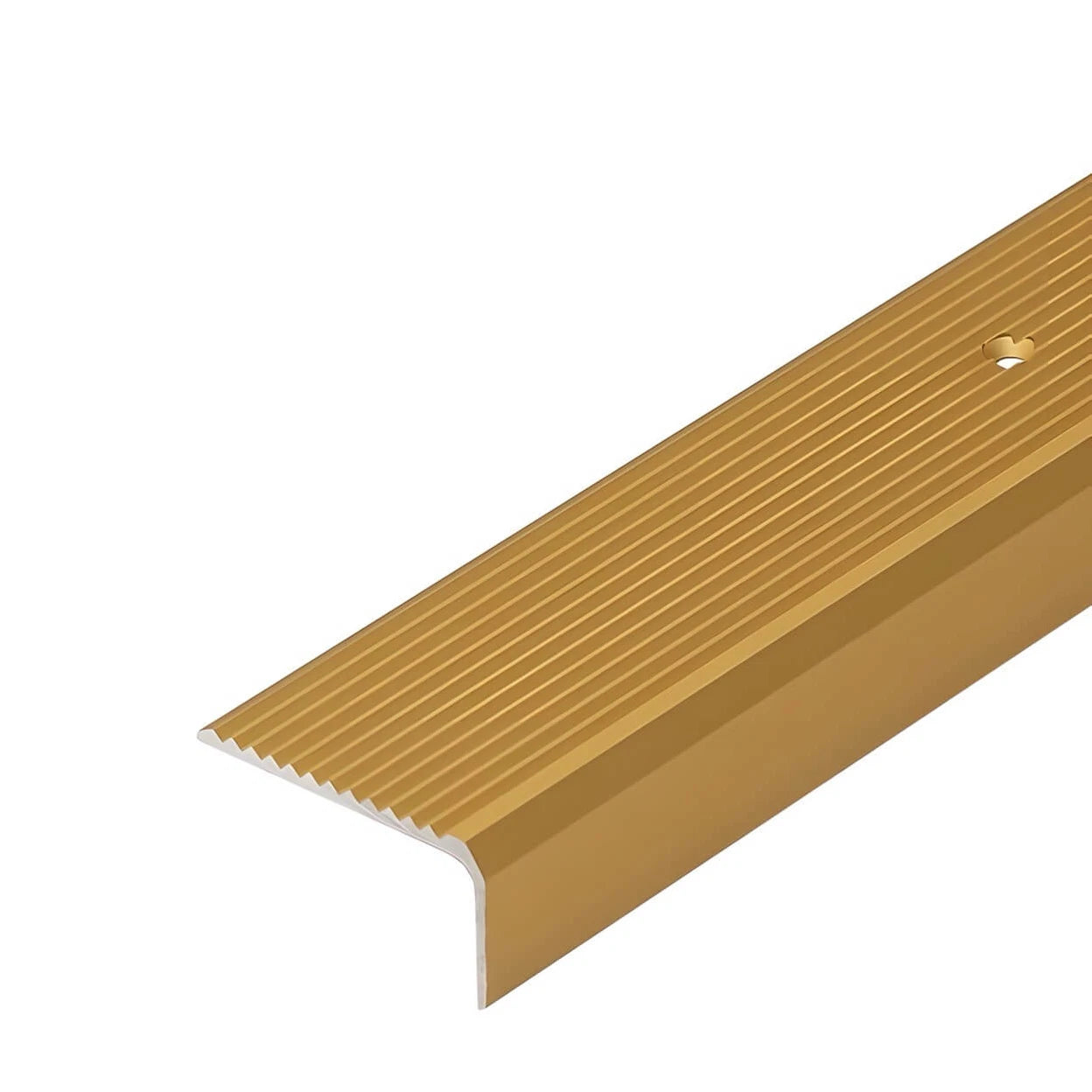
Stair Nosing Silver 1.0m Anodised Aluminium 44x23mm Anti-Slip Ribbed Stair Edges
Stair Nosing Silver 1.0m Anodised Aluminium 44x23mm Anti-Slip Ribbed Stair Edges
Text block
99 In stock
Discuss Your Project With Our Expert.
Email: procurement@rubberfitfloors.co.uk
Address: 9 Fiveacre Close, Thornton Heath CR7 6AS
Estimated delivery: 3 - 5 Working Days from Order Date.
Free Shipping For Orders Over £100


Reinforce Worn Stair Edges with a Clean Aluminium Finish
The front edge of a stair receives repeated pressure every time someone walks up or down the staircase. Over time, this concentrated foot traffic can leave the edge looking worn, damaged or poorly finished. Installing a rigid stair nosing helps cover and reinforce this vulnerable area while creating a straighter, more defined line across the step.
This 1.0m silver stair nosing is manufactured from anodised aluminium and features a 44mm x 23mm profile. Its size makes it suitable for steps that require a compact protective trim rather than a wide stair covering. The one-metre length can be installed as supplied where the staircase dimensions allow, or carefully trimmed to match a narrower step.
The neutral silver appearance complements a wide range of flooring colours and interior finishes. It can provide a practical finishing detail on new stair installations or help improve the appearance of existing steps where the original edge has become exposed through daily use.
Ribbed Surface for Improved Contact at the Step Edge
The leading edge of a step is an important contact point because it is where the foot lands when descending and pushes away when climbing. A worn, smooth or damaged edge may feel less secure underfoot, especially when loose dust or light moisture is present.
The ribbed surface of this stair nosing creates a textured contact area along the front of the step. The raised lines are designed to provide additional traction compared with a completely smooth metal surface while also giving the trim a structured, professional appearance.
This product is described as anti-slip, but the supplied information does not include an independently verified slip-resistance rating. It should therefore be used as part of a complete approach to stair safety that also includes secure installation, suitable lighting, regular cleaning and prompt removal of moisture or debris.
The silver profile may also help distinguish the step edge from darker surrounding flooring. The actual amount of visual contrast will depend on the colour, pattern and lighting conditions around the staircase.
Anodised Aluminium for a Rigid and Durable Profile
Aluminium is frequently used for stair trims because it provides a practical combination of rigidity, manageable weight and resistance to everyday wear. Unlike flexible edging strips, a rigid aluminium profile maintains a clearly defined shape along the front and upper edge of the step.
The anodised finish creates a protective surface layer while producing the clean silver appearance of the profile. It can help the aluminium retain a consistent finish under normal interior use, although scratches or marks may still occur if the nosing is exposed to sharp objects, abrasive debris or heavy impact.
The rigid construction can help protect the underlying stair edge from direct contact, but the nosing must be properly supported. It should not be used to bridge large gaps, repair loose stair components or conceal serious structural damage. Any damaged, unstable or uneven step should be repaired before the trim is installed.
When fitted correctly, the aluminium profile offers a neat way to finish exposed edges without placing a bulky covering over the entire tread.
Checking the 44mm x 23mm Profile Before Purchase
The 44mm x 23mm measurement refers to the dimensions of the profile that covers the upper and front areas of the stair edge. These measurements should be compared with the actual step before ordering because stair construction and flooring thickness can vary considerably.
The depth of the tread covering, the height of the front edge and the shape of the corner can all affect how the nosing sits. A profile that is too small may not provide sufficient coverage, while one that is too large may interfere with the intended position or create an unsuitable projection.
Each stair should be measured individually rather than assuming that every step is identical. This is particularly important on older staircases, where minor variations may exist from one step to another.
The condition of any carpet, vinyl, laminate, wood or other covering should also be considered. The supplied details do not identify one specific flooring type for this product, so suitability should be established by comparing the profile dimensions with the completed stair edge and intended fixing method.
Cutting the One-Metre Length to Fit
The 1.0m profile provides enough material for many standard stair widths and can be cut where a shorter piece is required. Before cutting, the intended position should be measured carefully and marked clearly on the aluminium.
An appropriate metal-cutting tool should be used to achieve a straight and controlled cut. The profile must be supported securely while it is being trimmed to reduce movement and help prevent an uneven edge. Any burrs or sharp fragments left after cutting should be removed before handling or installation.
A dry test fit should always be completed before adhesive is applied or fixing holes are made. This allows the installer to check the length, alignment and contact between the profile and the underlying step.
The exposed ends should be positioned neatly so they do not extend beyond the sides of the staircase. Accurate cutting is especially important when several pieces are being installed because consistent widths create a more professional overall finish.
Secure Installation Is Essential for Safe Performance
A stair nosing can only perform properly when it is firmly attached to a stable surface. Before installation, the step should be clean, dry, level and free from loose flooring, dust, grease or damaged material that could interfere with the fixing.
The supplied product information does not confirm that screws, plugs, adhesive or other installation accessories are included. The correct method must therefore be selected according to the stair substrate, the surrounding floor covering and the expected level of use.
Timber steps may require different fixings from concrete, tile, laminate or other surfaces. Any adhesive used should be compatible with both anodised aluminium and the material underneath. Mechanical fixings must be positioned carefully so they do not distort the profile or create raised points.
The nosing should sit evenly across its full length without rocking, lifting or leaving unsupported areas. If the stair edge is badly damaged or uneven, it should be repaired first rather than relying on the trim to correct the underlying problem.
Where the appropriate fixing method is uncertain, installation should be completed or reviewed by a suitably experienced person.
Maintaining Grip and Appearance
Dust, grit and moisture can collect around the front edge of a stair and gradually reduce the effectiveness of a textured surface. Routine cleaning is therefore important for maintaining both the appearance and practical performance of the ribbed profile.
Loose debris can usually be removed with a soft brush, vacuum cleaner or dry cloth. For more thorough cleaning, the surface can be wiped with a mild cleaning solution suitable for anodised aluminium. Abrasive pads and harsh chemical products should be avoided unless their compatibility has been confirmed.
The stair nosing should be inspected periodically to make sure it remains securely fixed. Any looseness, movement, lifting or damage should be addressed promptly because an unstable profile can create a trip point.
In busy areas, more frequent checks may be appropriate. Keeping the ribbed surface clean and the fixings secure will help the nosing continue to provide a defined and practical edge over time.
Frequently Asked Questions
What does the 44mm x 23mm profile measurement mean?
The 44mm x 23mm measurement refers to the dimensions of the aluminium profile that fits over the upper and front portions of the stair edge. It does not refer to the overall length, which is 1.0 metre. Buyers should compare both profile dimensions with the intended step, including any existing floor covering, before ordering or cutting the trim.
Can this one-metre stair nosing be cut to a shorter size?
Yes, the anodised aluminium profile can normally be trimmed to suit a narrower stair using an appropriate metal-cutting tool. The required length should be measured and marked carefully before cutting. The profile should remain securely supported during the process, and any sharp burrs should be removed before the piece is handled or installed.
Does the ribbed surface make the nosing slip-resistant?
The raised ribbed design provides a more textured contact surface than smooth aluminium and is intended to support grip at the leading edge of the step. However, the supplied information does not include a certified slip-resistance rating. Correct installation, routine cleaning, suitable lighting and keeping the staircase free from moisture remain essential parts of stair safety.
Are installation screws or adhesive included?
The supplied product details do not state that screws, plugs, adhesive or other fitting accessories are included. Fixings may therefore need to be purchased separately. The correct option depends on whether the stair is made from timber, concrete, tile or another material, as well as the condition of the substrate and the level of expected foot traffic.
Which types of staircase can this profile be fitted to?
Potential suitability depends on the dimensions and construction of the step rather than the room alone. The 44mm x 23mm profile must sit evenly against the upper surface and front edge without rocking or leaving unsupported gaps. Any carpet, vinyl, laminate, wood or other floor covering must also be considered when measuring the completed edge.
Can this stair nosing repair a damaged step?
The aluminium profile can cover and protect an existing stair edge, but it should not be treated as a structural repair product. Loose, cracked, unstable or severely damaged steps must be repaired before installation. Fitting the nosing over an unsound surface may prevent secure attachment and could allow the profile to move during use.
How should the silver anodised finish be cleaned?
Routine dust and grit can be removed with a soft brush, vacuum or non-abrasive cloth. For a deeper clean, use a mild solution confirmed as suitable for anodised aluminium, then dry the surface properly. Strong acidic or alkaline cleaners and abrasive pads should be avoided because they may affect the appearance of the silver finish.
How often should the stair nosing be inspected?
The profile should be checked periodically for movement, lifting, loose fixings, damage or trapped debris. The inspection frequency should reflect the amount of foot traffic the staircase receives. Any instability should be corrected promptly because a loose stair-edge trim can become a trip hazard rather than providing effective protection.
At Rubber Fit Floors, we are committed to delivering your orders efficiently and securely to your doorstep. Here’s everything you need to know about our shipping process:
1. Shipping Destinations
We currently ship to the United Kingdom, covering all regions including mainland UK, Northern Ireland, and the Scottish Highlands. If you’re located outside the UK, please get in touch with us to discuss custom shipping options.
2. Processing Time
An order confirmation email does not constitute acceptance of your order. Acceptance occurs only when the order has been dispatched. All orders are processed within 1–2 business days.
Orders placed on weekends or holidays will be processed on the next working day.
3. Delivery Time
Standard Delivery: 3–5 business days.
Express Delivery: 1–2 business days (available at an additional charge).
Delivery times are estimates only and not guaranteed. We are not liable for delays caused by couriers or external factors.
4. Shipping Charges
Standard Delivery: £7.99 (Free for orders over £100).
Express Delivery: £24.95.
For bulky or custom orders, shipping charges will be calculated based on the weight and dimensions of your package.
5. Tracking Your Order
Once your order is dispatched, you will receive an email with a tracking link to monitor your shipment. If you do not receive this information, please contact our support team.
6. Damaged or Lost Shipments
If your order arrives damaged or is delayed beyond the expected delivery time, kindly reach out to us immediately. We will assist you with replacements, refunds, or further inquiries.
7. Contact Us
For any shipping-related questions, feel free to contact our customer support:
📧 Email: procurement@rubberfitfloors.co.uk
📞 Phone: 07404270642
Address: 9 Fiveacre Close, Thornton Heath, CR7 6AS