


99 In stock
Couldn't load pickup availability
Discuss Your Project With Our Expert.
Email: procurement@rubberfitfloors.co.uk
Address: 9 Fiveacre Close, Thornton Heath CR7 6AS
Estimated delivery: 3 - 5 Working Days from Order Date.
Free Shipping For Orders Over £100
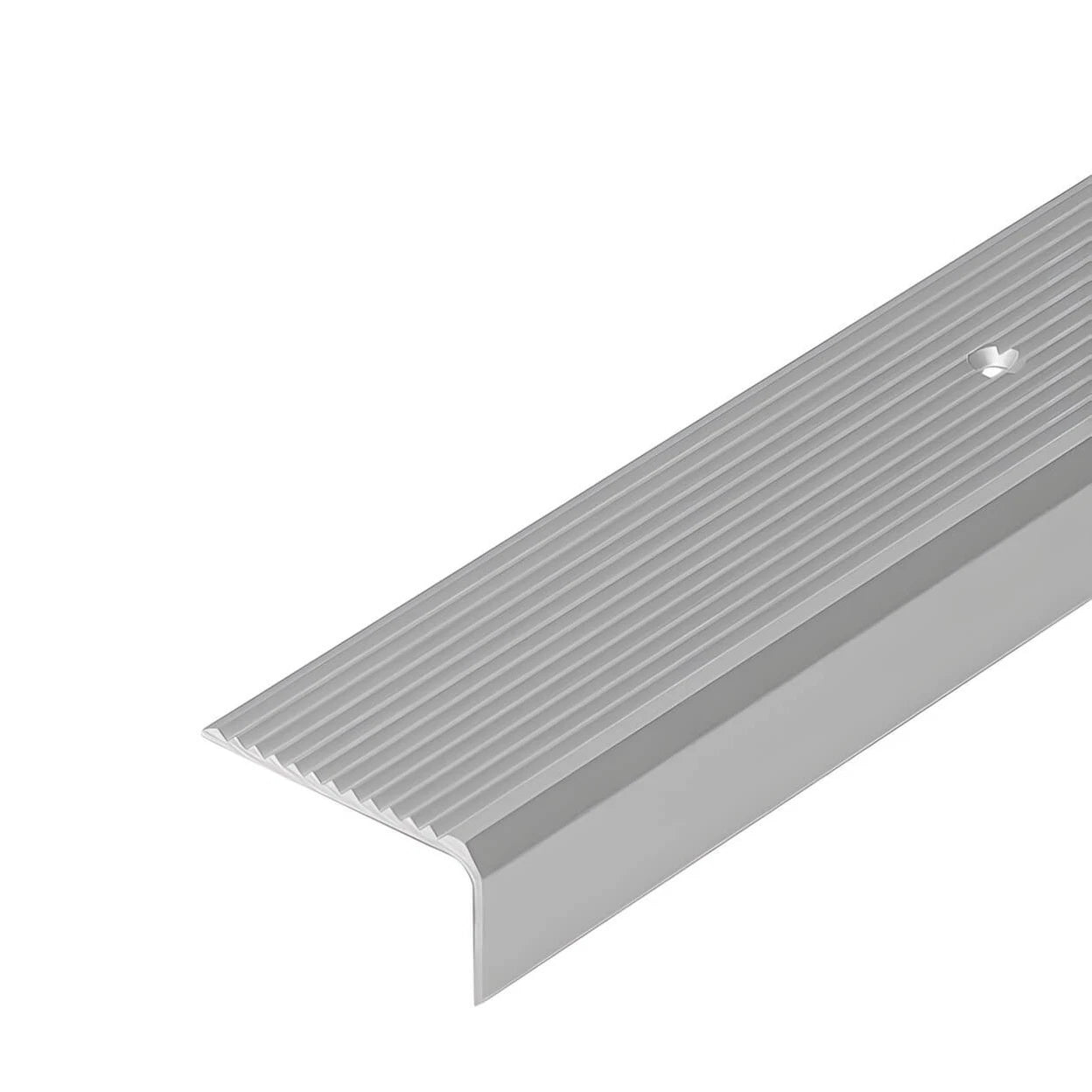
Stair Nosing Silver 2.7m x 44mm x 23mm Anodised Aluminium Anti-Slip Durable Trim
Stair Nosing Silver 2.7m x 44mm x 23mm Anodised Aluminium Anti-Slip Durable Trim
Text block
99 In stock
Discuss Your Project With Our Expert.
Email: procurement@rubberfitfloors.co.uk
Address: 9 Fiveacre Close, Thornton Heath CR7 6AS
Estimated delivery: 3 - 5 Working Days from Order Date.
Free Shipping For Orders Over £100


A Practical Finish for Exposed Stair Edges
Stair edges are exposed to repeated foot traffic, impact and everyday wear. Without a suitable protective profile, the front edge of a step can gradually become worn, chipped or visually untidy. This silver anodised aluminium stair nosing provides a practical way to reinforce that vulnerable area while creating a cleaner and more defined finish.
The profile measures 2.7 metres in length with overall dimensions of 44mm x 23mm. Its extended length makes it suitable for wider staircases or for cutting into shorter sections where several steps need to be completed from one profile. Careful measurement before cutting can help reduce material waste and produce a more consistent installation.
The silver finish gives the nosing a neutral appearance that works with a broad range of flooring colours and interior styles. It can complement modern staircases without becoming an overly prominent decorative feature, making it suitable for refurbishment work as well as new flooring projects.
Why Anodised Aluminium Suits Stair Applications
Aluminium is commonly used for stair-edge profiles because it offers a useful balance of strength, manageable weight and dimensional stability. The material helps protect the leading edge of the step without adding excessive bulk to the staircase.
The anodised finish provides an additional protective surface layer. It also creates the clean silver appearance associated with aluminium trims, helping the profile maintain a professional finish during normal use. Although any stair trim can show wear if exposed to harsh impact or abrasive materials, anodised aluminium is a practical choice for areas where a rigid and durable edge protector is required.
Unlike flexible stair-edge strips, this profile maintains a defined shape along the front of the step. That rigidity can help create a straighter visual line, particularly when the underlying stair edge is correctly prepared before installation.
The 44mm x 23mm profile should be checked against the dimensions of the intended step before purchase. Stair construction, floor-covering thickness and the shape of the existing edge can vary, so measuring the tread and front face is important for confirming an appropriate fit.
Anti-Slip Support at the Leading Edge
The leading edge is one of the most important contact areas on a staircase because it is where a person’s foot approaches or leaves the step. A correctly positioned stair nosing helps make this edge more clearly defined while providing an anti-slip surface at a critical point of movement.
This product is described as an anti-slip stair nosing. It is intended to provide additional grip and a more secure surface at the step edge compared with leaving a worn or unprotected edge exposed. However, no formal slip-resistance rating or independently tested classification has been supplied with the available product information. It should therefore be selected as part of a wider approach to stair safety rather than treated as a substitute for appropriate lighting, maintenance and careful installation.
The silver contrast may also make the edge easier to identify against darker flooring. The actual level of visual contrast will depend on the colour and finish of the surrounding stair surface.
For reliable performance, the nosing should sit evenly against the step without rocking, lifting or leaving unsupported gaps. The underlying surface should be structurally sound, clean and suitable for the selected fixing method.
Measuring, Cutting and Preparing the Profile
Before installation, measure each stair individually rather than assuming every step has exactly the same width. Small variations are common, particularly on older staircases. Recording the dimensions separately can help achieve a more accurate finish and reduce the risk of cutting the profile too short.
The 2.7m aluminium length can be trimmed where required using an appropriate metal-cutting tool. The profile should be firmly supported while cutting so the edge remains straight. Any sharp burrs created during cutting should be removed before the nosing is handled or installed.
A dry test fit is recommended before applying adhesive or inserting mechanical fixings. This allows the installer to check the positioning, confirm that the 44mm x 23mm profile sits correctly and identify any surface irregularities that may need attention.
The available supplier information does not confirm whether screws, plugs, adhesive or other installation accessories are included. Fixings should therefore be selected separately according to the stair substrate and the intended application. Timber, concrete, tiled and other stair surfaces may require different fixing methods. Where suitability is uncertain, advice should be obtained from a competent installer or the relevant fixing manufacturer.
The profile should not be forced over an edge that is too large, uneven or damaged. Preparing the stair properly before installation helps the nosing sit flat and reduces stress on the aluminium.
Long-Term Appearance and Routine Care
Stair nosing requires relatively simple maintenance, but regular cleaning is important because dust, grit and moisture can reduce grip at the step edge. Loose debris should be removed using a soft brush, vacuum cleaner or suitable cleaning cloth.
For more thorough cleaning, use a mild cleaning solution that is compatible with anodised aluminium. Strong acidic, alkaline or highly abrasive cleaners should be avoided unless their suitability has been confirmed, as aggressive products may affect the appearance of the finish.
The nosing should also be inspected periodically to ensure it remains secure. Any movement, lifting or loosening should be addressed promptly, as an unstable stair-edge profile can create a trip point rather than improve the staircase.
If the profile is installed in a particularly busy area, inspections may need to be carried out more frequently. The condition of the underlying stair and the security of the fixings are just as important as the condition of the aluminium itself.
With correct measurement, suitable fixing and routine care, this anodised aluminium stair nosing provides a practical way to reinforce exposed step edges while creating a neat silver finish across the staircase.
Frequently Asked Questions
What does the 44mm x 23mm measurement refer to?
The 44mm x 23mm measurement describes the overall dimensions of the stair-nosing profile rather than its total length. Because stair edges and floor-covering depths can vary, these dimensions should be compared carefully with the intended step before ordering. A dry test fit is also recommended before final fixing.
Can the 2.7m stair nosing be cut into shorter lengths?
Yes. Anodised aluminium can normally be cut to the required width using an appropriate metal-cutting tool. The profile should be securely supported during cutting, and any sharp burrs should be removed afterwards. Each stair should be measured separately because small width variations can occur across the same staircase.
Are screws or adhesive supplied with the stair nosing?
The available product information does not confirm that screws, plugs, adhesive or other installation accessories are included. Suitable fixings should therefore be selected according to the stair material and installation conditions. Timber, concrete, tile and other substrates may each require a different fixing approach.
Is this stair nosing suitable for every type of staircase?
Suitability depends on the dimensions, shape, condition and floor covering of the staircase. The 44mm x 23mm profile must fit the step without rocking or leaving unsupported gaps. Customers should measure the tread edge carefully and consider the thickness of any carpet, vinyl, laminate or other covering before purchase.
How does the anti-slip design improve stair safety?
The nosing is designed to provide additional grip at the leading edge of the step, which is a key contact point during ascent and descent. It also creates a more defined edge. However, no formal slip-resistance test rating has been supplied, so it should be used alongside correct installation, good lighting and regular stair maintenance.
How should anodised aluminium stair nosing be cleaned?
Routine dust and grit can be removed with a soft brush, vacuum or damp cloth. For deeper cleaning, use a mild product confirmed as suitable for anodised aluminium. Avoid harsh abrasive pads and aggressive chemical cleaners, as these may mark the silver finish or affect the appearance of the anodised surface.
Why should the profile be test-fitted before installation?
A dry test fit confirms whether the profile sits flat against the step and whether its dimensions match the stair edge. It also allows the installer to identify uneven areas, damaged corners or obstructions before drilling or applying adhesive. Correct preparation can produce a cleaner finish and reduce the likelihood of movement after fitting.
At Rubber Fit Floors, we are committed to delivering your orders efficiently and securely to your doorstep. Here’s everything you need to know about our shipping process:
1. Shipping Destinations
We currently ship to the United Kingdom, covering all regions including mainland UK, Northern Ireland, and the Scottish Highlands. If you’re located outside the UK, please get in touch with us to discuss custom shipping options.
2. Processing Time
An order confirmation email does not constitute acceptance of your order. Acceptance occurs only when the order has been dispatched. All orders are processed within 1–2 business days.
Orders placed on weekends or holidays will be processed on the next working day.
3. Delivery Time
Standard Delivery: 3–5 business days.
Express Delivery: 1–2 business days (available at an additional charge).
Delivery times are estimates only and not guaranteed. We are not liable for delays caused by couriers or external factors.
4. Shipping Charges
Standard Delivery: £7.99 (Free for orders over £100).
Express Delivery: £24.95.
For bulky or custom orders, shipping charges will be calculated based on the weight and dimensions of your package.
5. Tracking Your Order
Once your order is dispatched, you will receive an email with a tracking link to monitor your shipment. If you do not receive this information, please contact our support team.
6. Damaged or Lost Shipments
If your order arrives damaged or is delayed beyond the expected delivery time, kindly reach out to us immediately. We will assist you with replacements, refunds, or further inquiries.
7. Contact Us
For any shipping-related questions, feel free to contact our customer support:
📧 Email: procurement@rubberfitfloors.co.uk
📞 Phone: 07404270642
Address: 9 Fiveacre Close, Thornton Heath, CR7 6AS